Featured

My First Blog Post

Va! laisse couler mes larmes

The lyric mezzo in the aria from the third act of Werther
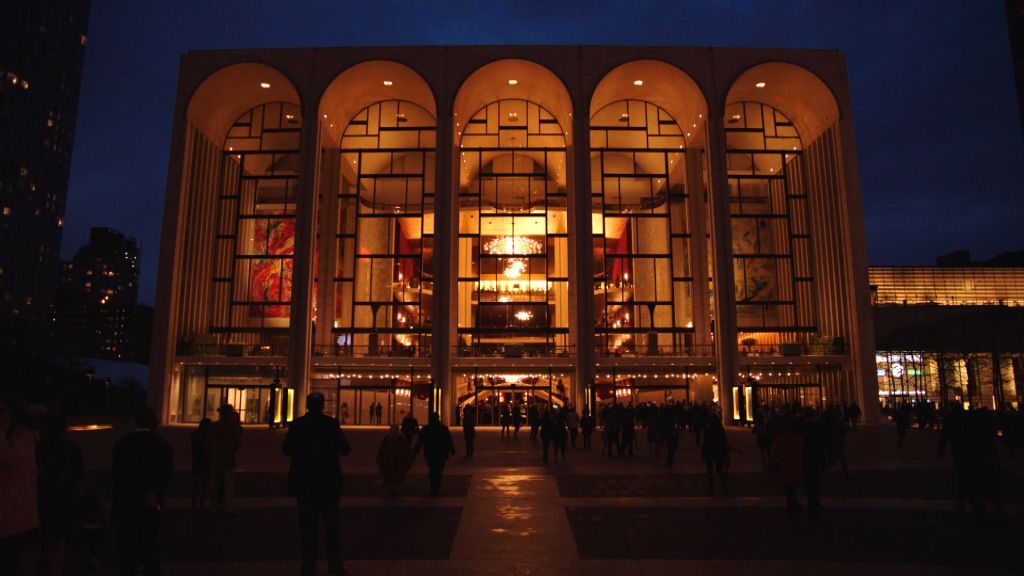
This image was taken of the Metropolitan Opera and it was retrieved from https://www.thirteen.org/blog-post/how-to-experience-the-metropolitan-opera-we-count-the-ways/. I think this is an exquisite image that illustrates the beauty of the Metropolitan Opera through different form of art then the Opera itself is expressed in.

I found the timbre of the lyric mezzo voice to be bold and powerful when I listened to this aria, which I think very much enhances the text of it. Before even reading the translation of the text, I knew that the woman singing was filled with sorrow and pain. Her voice ranges from a deep tone when she is filled with the uttermost sadness, but then it becomes higher pitched and louder to show that the sadness is overwhelming and unbearable. The text translation shows that she feels her heart has been broken and there is nothing to be done that can repair it. I feel this as she sings because it is almost like she is going to start crying right in the middle of it, but she holds her voice beautifully even with so much agony accompanying it.

I hear many emotions when I listen to this aria all of which are powerful and yet not happy at all. When her voice becomes heavier and slower, I can feel how exhausted she is from the pain that she holds and this is shown in the text translation as well as she talks about how fragile and weak her heart is.

The flutter of her voice embodies what I would imagine someone crying to sound like if they could simultaneously sing to express that emotion. I see colors of blue and black which tell me she has sacrificed a lot in her life, and it is all catching up to her. I even see a deep red when I hear her voice get to it’s lowest point, when all of her hurt comes together in the text. Her mood is of a deep depression, the kind that leaves you hopeless and alone. It is a mood that I, as the listener, feel she may never come out of.

The operatic singing style in this aria is very calming to me for some reason. Even though this woman is clearly in agony, the way her voice rises and falls so gracefully is sort of peaceful to me. I think this singing style allows this hopeless emotion that we have all felt in our lifetime to be as powerful as it deserves to be. The way her voice can project so loudly and forcefully has a way of expressing emotions like I have never considered was possible. I don’t think a different singing style could have shown so much pain because I didn’t have to know what the lyrics were saying to feel in my gut what story she was telling.

The lyric mezzo voice in this aria was definitely a lot different than the mezzo voices in the popular music today, which is not necessarily a good or bad thing. I think that the lyric mezzo from this aria had a much bigger impact on me than any contemporary music could because I feel like her range of voice and ability to project that affected me more as a listener. I felt a lot more of emotion in that than I do listening to the radio, however there are some really great contemporary singers with mezzo voices that can convey sad emotions well.

Adele has been a singer that I have listened to with my family since I was young. I have always found her voice to be very bold and authentic and when I listen to her songs I can feel all of the emotion and agony behind her lyrics. One of her songs that I have always found to resemble this is called Turning Tables and can be listened to by clicking this link https://www.youtube.com/watch?v=dx7sLNyIeQk.

The deepness and richness of Adele’s voice reminds me of the lyric mezzo in the aria. I feel like both Adele and the singer in the aria are putting in all of their emotions and being completely vulnerable to their audiences in their performances. I also hear a similar flutter in their voices when they begin to sing louder and pour even more sadness and agony into their lyrics, which I love. I really believe that if I didn’t know either of the lyrics for the aria or Adele’s song, I would still be able to feel just as much emotion.

I think that Adele’s song differs from the aria because it is more upbeat and contemporary than the aria. Adele sings the song a little bit faster and I feel like she almost has more hope in her voice and words because the aria is clearly being sang with all hope lost and only sadness left. I think that Adele sings her song with a sort of boldness and power that she will be able to overcome the grief, but the aria is sang with a boldness and strength that shows what she has been through rather than what she will overcome.

Joyce Didonato and Piortr Beczala’s Live Performance of Werther Highlights

This image was retrieved from https://abcnews.go.com/Entertainment/wireStory/show-didonato-beczala-sing-opera-apartment-69610818.

The first thing I observed from watching this live performance of excerpts from Werther (right in Joyce Didonato’s living room) was that it felt like a very intimate setting. Instead of seeing this performance at the MET where we would have been separated from the performers by many people in the audience as well as a stage, it felt as if it was just the four people seen in the video and me. In today’s world with COVID-19, the most intimate interaction most people can have with anyone else is through a screen and seeing this performance allowed me to connect with the characters of this story.

I also came to see that this performance was a lot more informal than I expect it would have been at the MET. You get to see Joyce and Piortr interact and you can understand that in preparing for this performance they have grown to have a great relationship with each other and an even better relationship with the story. They both had fun a lot of fun with it and encouraged each other’s performances which I thought showed their dedication to the characters and story itself.

This story felt a lot more real seeing it performed in this at-home video than it did way back when I read the libretto. I think I only really saw the words when I was reading the libretto, so I was able to put together a story but it was a story that lacked any human touch. In order to really understand the hardship and loss that everyone in Werther faces, I needed to see the characters and hear their voices. I think that this aspect I needed was fulfilled when I watched the full Werther performance a few weeks ago, however in seeing this at-home video I believe I got a lot more emotion out of it. The video was blurry so I couldn’t really see their facial expressions and there was no english translation, but I think not having these things really allowed me to simply hear the emotions and passion of this story through the characters’ voices.

I feel like this performance overwhelmingly showed not only the emotion within the Werther story, but it also held the emotions of Joyce and Piortr. They have worked really hard to be able to perform this Opera and although this is not the way they imagined their hard work to pay off, it has all come to this one performance. I can feel that this is sad and bittersweet for them, but in them doing this performance I can also see just how dedicated they are to Werther. Instead of being upset or angry that their performance was canceled due to COVID-19, they persevere and find a way to share this story because they feel so deeply about it. They think that the story and this performance can bring some artistic pleasure to those who watch it live, and I believe that their biggest goal in performing it like this is to bring positivity to the audience. It’s a weird thought because the story itself is quite dark and depressing, but it’s a story that a lot of people love and have looked forward to seeing and perhaps just seeing the performers and how they have kept positive can spread positivity to those watching.

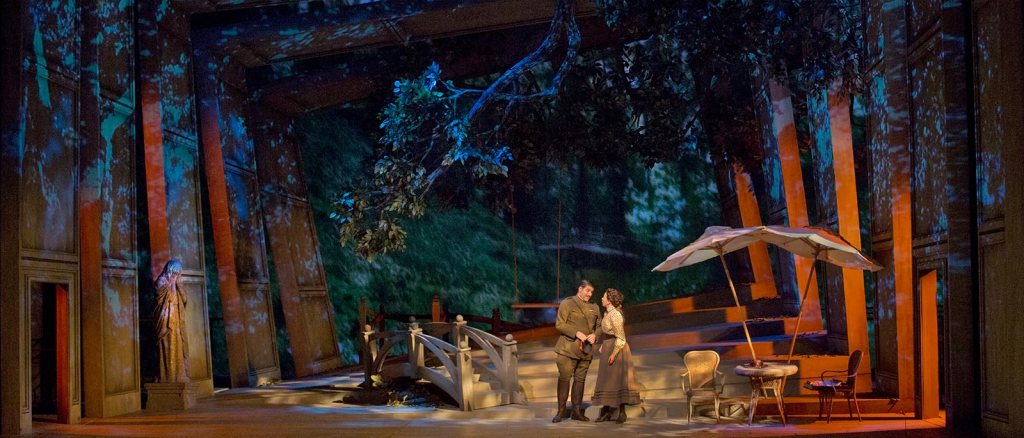
How the Massenet Uses Contrasting Musical Moods to Portray a Story

This image was retrieved from https://www.architecturalrecord.com/articles/3088-architecture-on-stage-metropolitan-opera-s-werther.

Near the end of the Wiener Staatsopera production of Massenet’s Werther, there is a major juxtaposition in the musical moods being portrayed. While Werther is committing suicide and ultimately on the edge of death, you can hear children’s voices in the distance singing Christmas carols.

It starts off with very dark, sad moods as Charlotte has found Werther bloodied and dying. The way Charlotte sings is filled with regret and realization. Her voice is loud, but it also sounds like at any moment her voice could crack and become filled with hysterical tears. I find the mood behind Werther’s singing to be much different from this. He feels sadness for the way things had to end, but ultimately I think he feels confident in his choice to end his life. His voice is deep and humble, and I think the mood he sets with it paints a picture of a man in love who’s story must come to an end. On the other hand, there is the children’s voices in the distance which have an entirely different mood associated with their music than either Charlotte or Werther. This musical mood is pure joy as it is sung by innocent, happy children on what is probably one of the most joyful holidays a child can have.

I think that the one of the points in having this stark contrast in musical moods is to represent the life cycle. Werther is on his deathbed and he has lived a life that he deems full enough to end right in this moment. He can’t bear another thought at staying in this world, so he decides to ultimately die. While this brings about a very depressing, devastating mood that is shown in the gloomy music, it represents something we must all face- the act of birth and death. Although it is very sad that Werther is dying and this is his end, the story being told shows these children who have their own beginnings ahead. They are young, and they will have full lives that have the potential to hold the happiness that is heard in their voices as they sing this Christmas song. But ultimately, they too will die and there will be sadness again, which will be juxtaposed with the happiness of new life that is brought into the world.

I think the children singing the christmas song is also a way to show that this isn’t the end for Werther- that there is redemption for him. He calls the children “angels” and “innocent ones” and I think it solidifies in his last dying moments that he will find peace and happiness when he is gone. They are singing about how happiness is in the air and in a way, this is happy for Werther. He has been suffering for a long time now, feeling his love is not reciprocated, and the juxtaposition of the musical moods gives the audience a chance to recognize that perhaps this isn’t as sad of a moment as we may think. Werther believes this is a new beginning for him, one that won’t be filled with loneliness and suffering, and this new beginning is encompassed by the children’s voices in the distance.

I do believe the children’s cheerful voices singing in the distance is also shedding on light on the fact that this is in no way a happy thing for Charlotte. The way that the children’s voices hold only euphoria and optimism allows the audience to see how deeply this is breaking Charlotte through the stark contrast of it all. During this scene Charlotte has no happiness in her voice, it is longing and sorrowful until the very end and I don’t think the audience could have fully comprehended how awful this is for her, without the juxtaposition of something that is purely good.

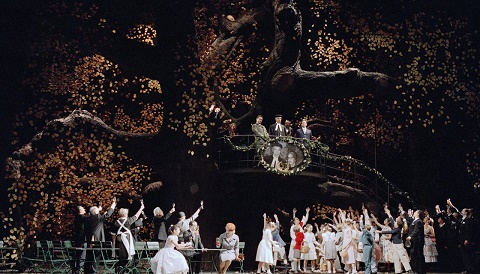
Werther in the Wiener Staatsoper Production of Massenet’s Werther

This image is from the Wiener Staatsoper in Vienna and it was retrieved from, http://operajournal.blogspot.com/2017/04/massenet-werther-vienna-2017.html.

After watching the Production of Massenet’s Werther at the Wiener Staatsoper, I am really excited to see it myself in March! It was really interesting to see how the characters were able to take the words I read from the Libretto and turn them into a story filled with passion and sadness. I focussed a lot of my attention on Werther’s character in the opera because I wanted to analyze how his character develops over time.

I feel like in the beginning of the opera Werther is probably the happiest that I see him throughout the rest of it. He is going to the dance with Charlotte and I think that it’s in the exact moment of seeing her give the children food and take care of them that he realized he wanted more than just this night with her. He fell in love with her in that moment and I think all of his goals just became related to that relationship. He wanted to not only be with her but to make her the happiest woman in the world and show her how amazing she is. Ultimately, I believe his goals were to make her happy by being with her and having a mutually loving relationship, but it takes two to make that goal attainable.

While I think Albert’s presence is one of the most obvious things that gets in the way of Werther achieving his goals and being with Charlotte, I think there is an underlying impediment that is working to do the same thing. Charlotte gave her mother her word that she would marry Albert before her mom died, and Charlotte will not break this promise no matter what – even if it means she is sad and lonely for the rest of her life. I think that Charlotte still has a lot to work through emotionally from her mother’s death, and her way of holding onto her mother’s memory and presence is by holding this promise no matter what the consequences are. I obviously didn’t get to see Charlotte’s mother’s character to know her well, but I would assume that if her mother could be there to see her depressed and alone married to Albert, she wouldn’t deny her daughter’s love for Werther.

I think that one of the goals that truly remains the same throughout this story for Werther is that he just wants to make Charlotte happy, even if it means sacrificing his own happiness. When Charlotte tells Werther that he has to leave for awhile he is clearly upset about it and by no means actually wants to be apart from her, but he does it anyways. One way that Werther definitely still tries to attain his goals of being with Charlotte despite her telling him to leave is by sending her those letters. In sending those letters, he speaks of his sadness and love for her and I think that part of him is trying to make Charlotte pity him and ask him to return. I think that the goal of the letters is also to make sure Charlotte doesn’t forget him or the love that she feels for him deep down even if she won’t yet admit it.

When Werther does return on Christmas as Charlotte had originally told him to, he has clearly reached a breaking point. He still wants to make Charlotte happy and he still wants her to choose him – to leave her husband who has made her nothing but sad and come be with him. I think he can see how much Charlotte loves him in that scene, but she still refuses to show it and denies him yet again saying she has a husband. I think this is where Werther’s goals really change. As much as he wants to make Charlotte happy and love her, he is filled with so much sadness and pain. He has sacrificed so much for charlotte and he has been tortured by her not being with him and it has all just became too much for him. I think he started thinking about himself more, and his goals became taking care of himself. He didn’t want to suffer anymore and he spoke of how he didn’t think this death would be the end for him.

Werther’s new goal was to end his own life, and to spend his last moment’s with Charlotte. He achieved this goal and he died in her arms, knowing how much she loved him and leaving her no longer with a choice to make. It was clear that Charlotte would rather be with Werther, but I think he could tell how important her promise to her mother was. It was hurting her so much to feel the things she was for Werther because she felt like she was betraying her mother, and Werther made the decision for her. I think Werther died hoping he would bring more happiness and ease to charlotte, and he died in the hope to ease his own pain.

“Sull’aria” from Le Nozze di Figaro and The Shawshank Redemption

This is an image from the film The Shawshank Redemption and was retrieved from, https://www.empireonline.com/movies/reviews/shawshank-redemption-review/

In the film, The Shawshank Redemption, an inmate plays the “Sull’aria” from Le Nozze di Figaro to project throughout the Shawshank prison and catch the attention of every person there. After the aria was stopped the narrator of the film says, “I have no idea to this day what those two Italian ladies were singing about. The truth is I don’t want to know.” I can understand why he doesn’t want to know what the words they sang were, because at first I didn’t either. I listened through the Sull’aria a couple of times without having the translation shown because before reading the story those women were telling, I wanted to feel it.

In the film it is obvious to me that every inmate in that prison is feeling the opera to their core and after hearing it myself, I think that the way it made them all feel is free. The beauty of those women’s voices is probably the sort of beauty that these people don’t get to experience often in prison, so for even just a few moments it can remind them that life is full of beautiful things. This is one of the more uplifting arias that I have listened to because I could feel a lot of hope and maybe even happiness in their voices.

After reading the translation of the Sull’aria it is clear to me that Countess Almaviva is plotting something against her husband with her servant because she suspects he is cheating on her. I have seen the entire Shawshank Redemption film so I know that the reason the main character Andy was sent to prison was that he supposedly killed his wife along with the person he found her having an affair with. I think that the fact that Andy chose this aria to play at the Shawshank prison is quite ironic because these two women are finding joy in the fact that they can prove her husband has been unfaithful to her. I think Andy can relate to how it feels to find out that someone you love has cheated on you, but I also think it’s probably been difficult for him to fully process those feelings when his imprisonment was followed shortly after it. It’s ironic because Countess Almaviva gets to feel powerful and free in finding a way to expose her husband’s cheating, but Andy never got to feel free at all and I think maybe he’s finally feeling his freedom through Countess Almaviva’s freedom. I do believe the feelings of hope and liberation that are felt in the prison when Andy plays the aria are directly related to the feelings of hope and freedom that Countess Almaviva feels as I’d assume her next steps would be to expose her husband and get out of that relationship.

I think that these two very different forms of art, film and opera, are related in such a significant way mainly because the characters in both have felt the same thing. When Countess Almaviva started to suspect her husband’s infidelity, I would assume she went through a lot of days where she felt hopeless and worthless. There must have been days when she questioned if it would ever get better and felt imprisoned by her husband and her life. These prisoners in Shankshaw have felt the same way up until now, utterly hopeless and completely lost. They go day-to-day doing the same things with very little freedom to do what makes them happy. In the Sull’aria that Andy plays, Countess Almaviva seems to me to be excited and full of power. She has realized that she can prove her husband has been cheating on her and she ultimately feels hopeful again. I can feel in her voice that she feels strong and powerful because she knows that she can do something about it and in doing this behind his back, she gets a little taste of freedom. When the prisoners in Shankshaw hear this aria, they too can hear the joy and hopefulness in Countess Almaviva’s voice as she sings to her servant. I think that hearing this allows them to feel it even if it’s just for a moment. This beautiful aria allows them to feel free and returns to them the promise of a better future.

Create your own website, free on WordPress.com.Create your own website.
Start free